Nexus design
An operator wants to load a local model. Ada needs to read the resulting readiness observation. In Nexus the operator can preview the model change, follow its request and inspect Ada’s access to this instance. This earlier standalone study uses fictional records. The installed Nexus operations directory uses the current Vessel snapshot. Its controls and layout will be refined through use. Every figure shows the same screen. Open the interactive Nexus study.
Overview
Start with the sample snapshot from 19 November 2026 at 09:42 UTC. Under Operations, choose Capabilities for a model or Transitions for a request. Under People and access, choose Colleagues for a paired operator’s availability, Users for a local account, or IAM for its scoped authority.
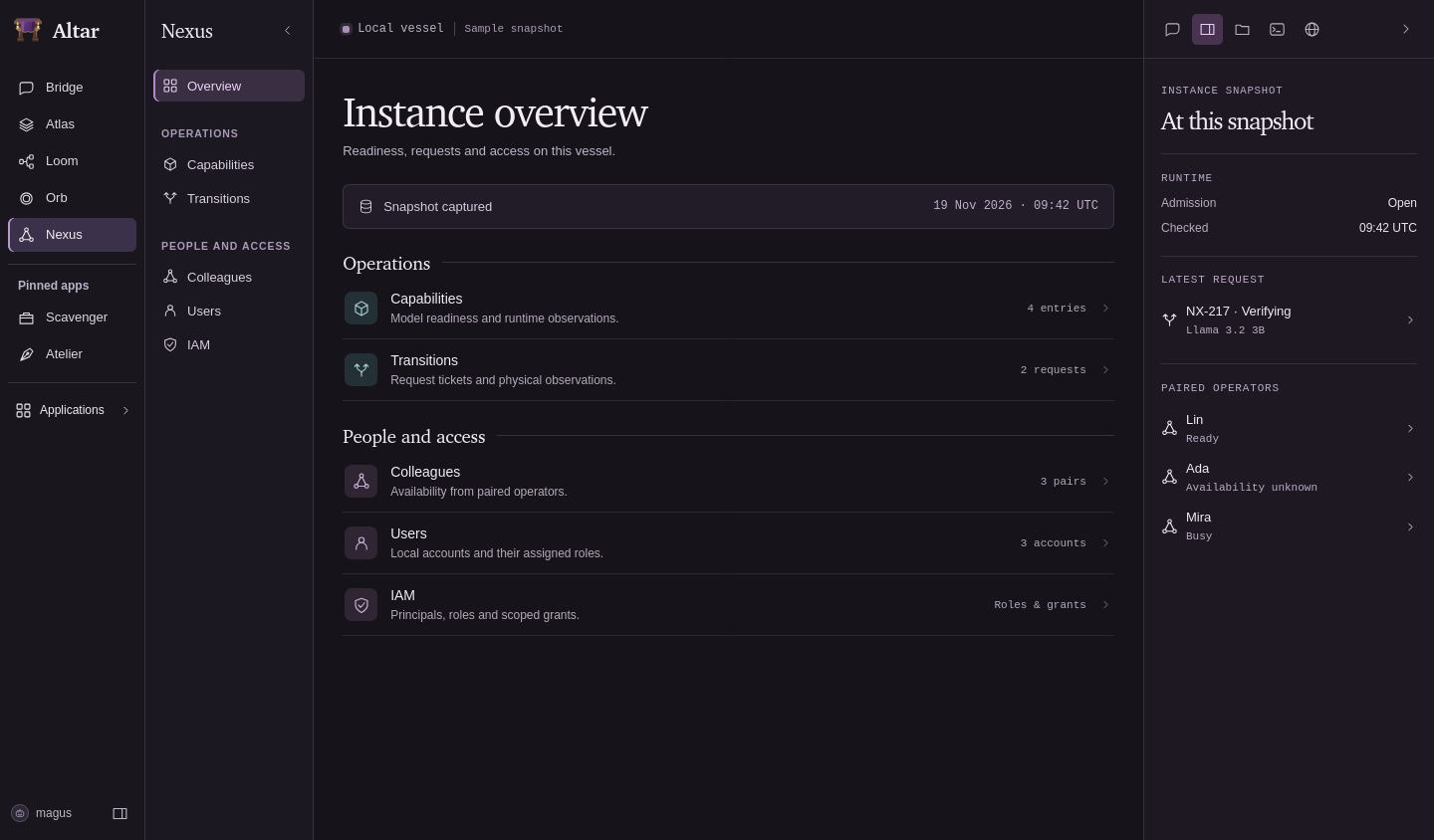
On the Altar rail, Applications opens the catalogue. Its chevron or a right-click opens the quick list over Nexus. Closing either returns you to the selected record. Browse and pin applications.
Selecting a row in Nexus opens its details on the right. The horizontal controls there also open Walking Bridge, Files, Terminal and Web. On a narrow screen, closing the detail should return you to the selected row. On refresh, the design should preserve its identity and show when that record has become unavailable. Moving between screens.
Capabilities
Select Qwen2.5-Coder 14B. The Awaited chip corresponds to the raw observation
activatable, checked at 09:41:59 UTC. Choose Preview transition to see what the
local instance would have to release to load that model.
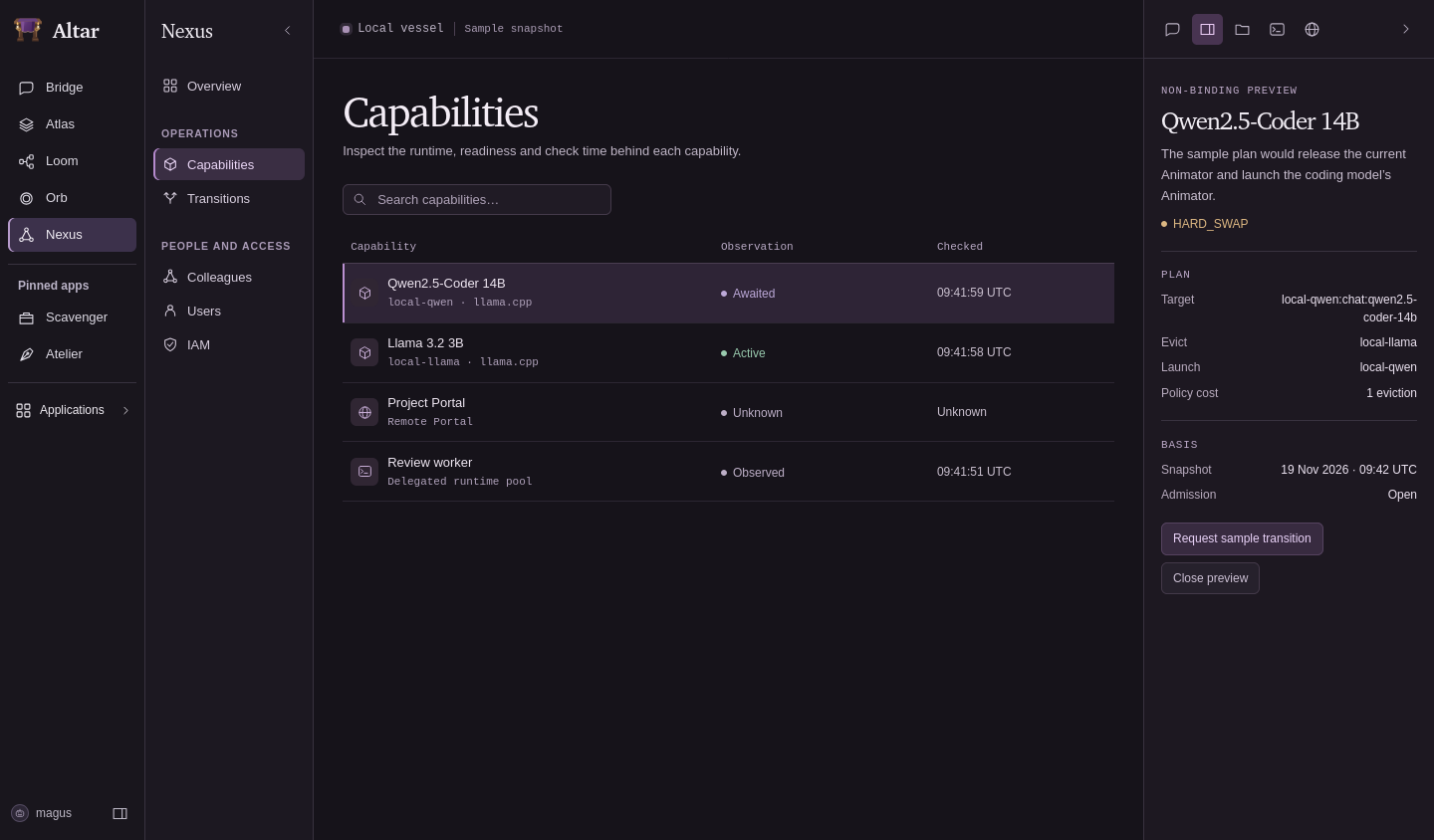
The sample plan would evict local-llama and launch local-qwen. Its policy cost of
one counts the planned eviction. The preview reserves nothing. Choose Request sample
transition to create the example NX-218 and inspect it in Transitions. For comparison,
the active Llama 3.2 3B returns NO_OP. Portal rows offer observation details only.
Preview a change in the installed Nexus.
Transitions
Open NX-217. Its process-local ticket settled at 09:41:56 UTC. The latest physical observation for that request is verifying at 09:41:54 UTC. The task returned. The physical outcome is still open in this snapshot.
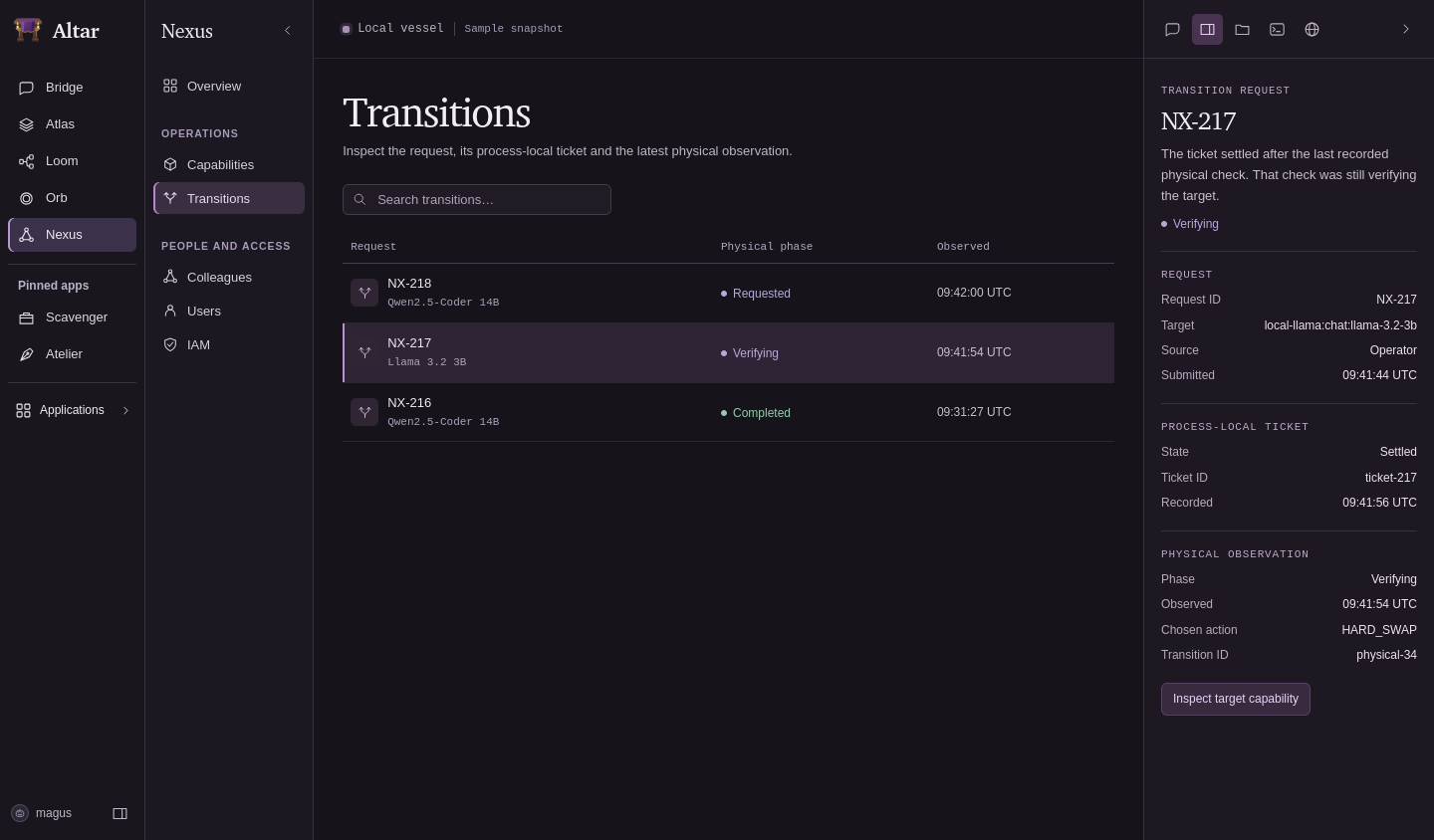
If you created NX-218, its ticket is warming and its recorded physical phase is requested. Keep the request identity when comparing those records. In the installed Altar, an Orb event can lead to the exact Nexus request when the Run supplies that correlation. Follow a ticket and its physical observation.
Colleagues
At the sample snapshot, Lin’s Ready report is current. Select the paired colleague Ada to see why her row reads Availability unknown.
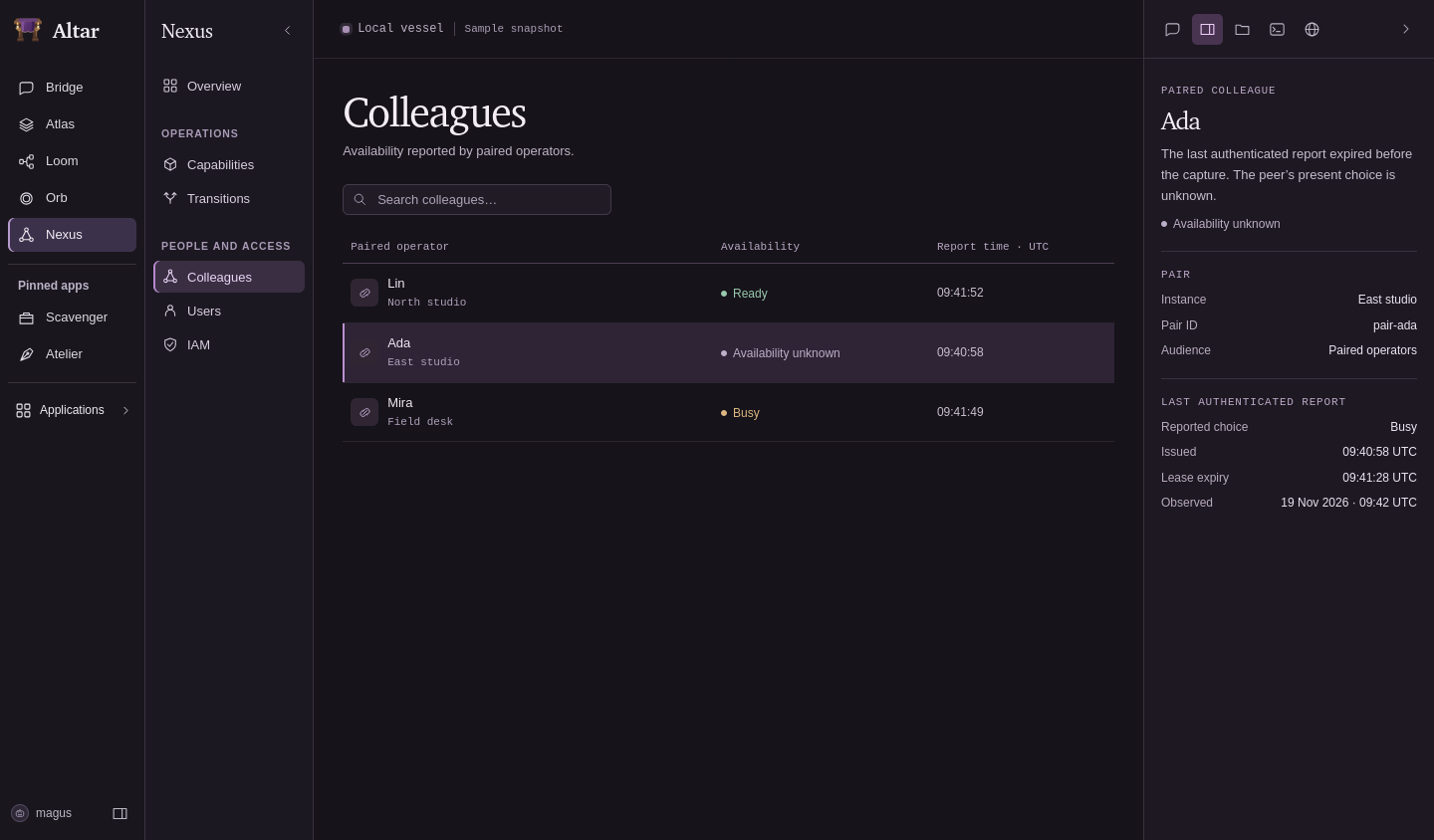
Ada reported Busy at 09:40:58 UTC. The authenticated report expired at 09:41:28 UTC. Her current preference is unknown. Ready means an operator welcomes a request. Accepting a task requires its own authorization. Read colleague presence in the installed Nexus.
Users
Search Users for Ada. This entry identifies an account on the local instance. A matching name in Colleagues gives you a separate record for a paired operator.
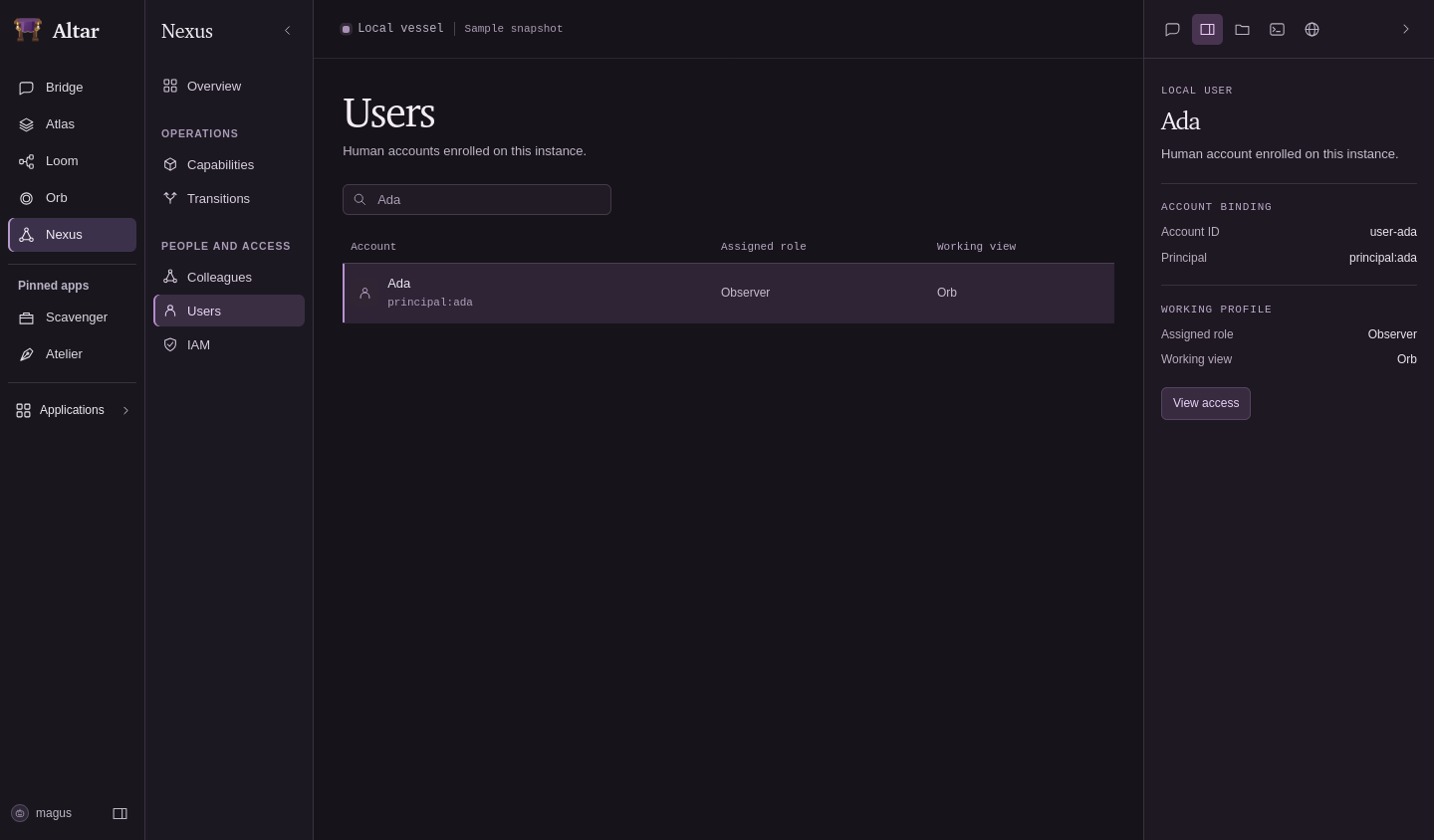
Ada’s account binds to principal:ada, carries the Observer role and opens Orb
by default. Choose View access to carry her exact Principal into IAM.
People, accounts and instances.
IAM
Open Read Nexus observations under Grants. Ada’s sample grant permits reading the local readiness snapshot. The details identify the action, object and audience.
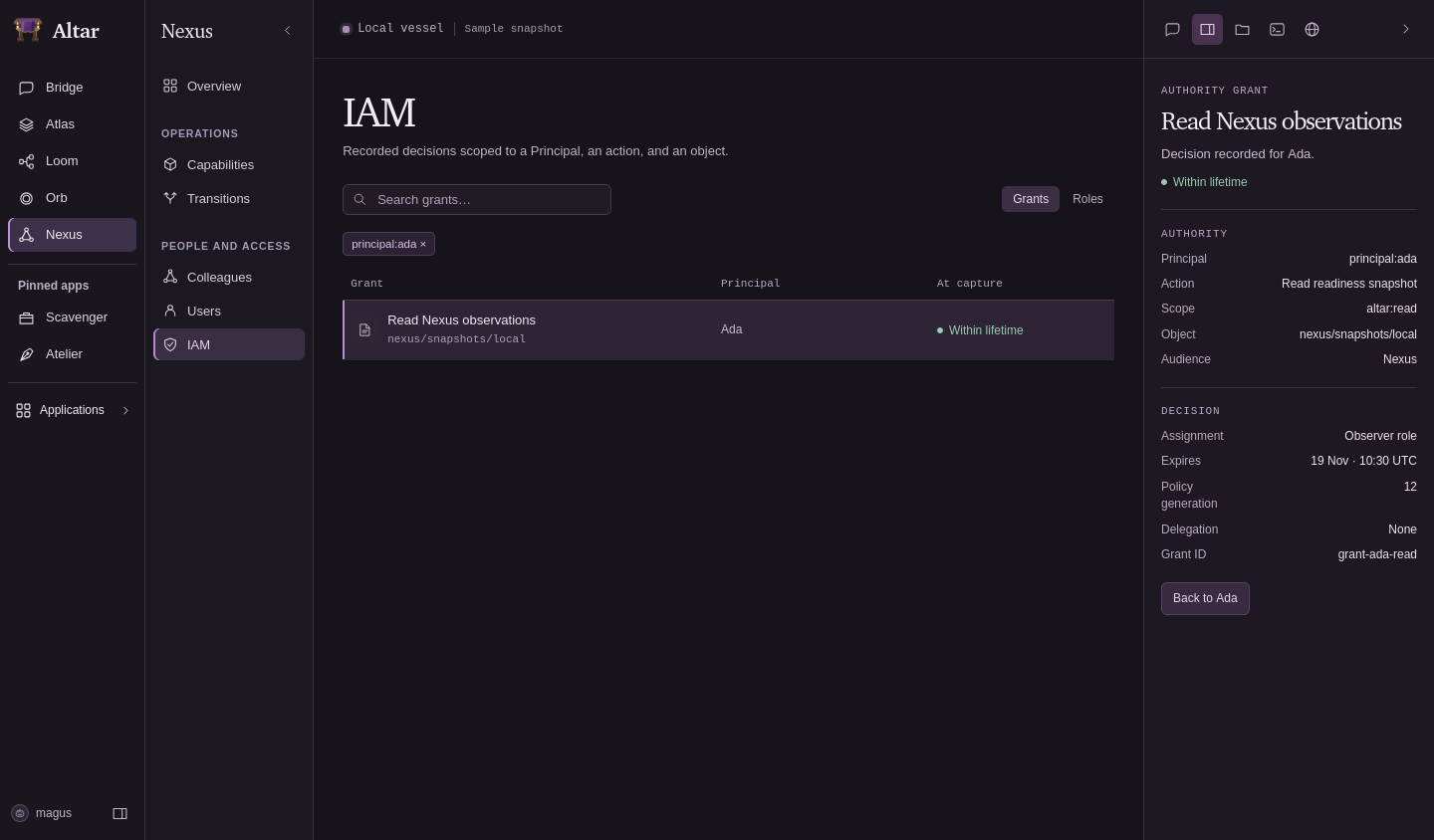
The object is nexus/snapshots/local, the audience is Nexus, and the grant expires at
10:30 UTC under policy generation 12. Open Roles to inspect the named assignment behind a grant.
Back to Ada restores the selected user. Requesting a transition would require a grant
for that operation.
Users and IAM are read-only design examples. The current Altar uses its trusted local operator. Ward owns identity, grants and the requirements for multi-user administration. Identity and grants · Delivery boundaries.